
How to Choose a Commercial Slush Machine for Your UK Venue
Choosing a commercial slush machine can feel like a big decision, especially if frozen drinks are completely new to your business. The good news is that there isn't one machine that's automatically right for every venue. A small café serving one popular flavour may need something very different from a busy leisure attraction offering several choices throughout the day. A few things tend to make the biggest difference: how much slush you expect to sell, how many flavours you want to offer, the space available and how busy your peak trading periods can become. At Mr Slush, our Freazy commercial slush machine range gives businesses three straightforward options: a single, twin or triple 12-litre tank machine. This guide explains the differences and what each option can offer, so you can get a better idea of which machine could work for your business.
What makes a good commercial slush machine?
Commercial slush machines are designed to freeze, mix and hold slush at the correct serving consistency throughout the trading day. While tank capacity is naturally important, there are several other features that can make a difference in a commercial environment.
These include:
- Freeze-down time
- Number of flavours available at once
- Capacity during busy periods
- Available counter space
- Ease of serving
- Cleaning and maintenance
- Power consumption
- Reliability and expected machine life
- Warranty and ongoing support
The right balance will depend on how slush fits into your venue. For some businesses, it might be an additional seasonal drink. For others, slush can become a major part of the refreshments offer during weekends, school holidays and warmer weather.
How many slush flavours would you like to offer?
One of the easiest ways to narrow down the options is by thinking about the number of flavours you'd like customers to see at once.
The Freazy range is available in three configurations:
| Machine | Tank configuration | Total capacity | Flavours at once | Often suited to |
|---|---|---|---|---|
| Freazy 1 | 1 x 12L | 12 litres | 1 | Smaller venues, single flavour offers and lighter demand |
| Freazy 2 | 2 x 12L | 24 litres | 2 | Regular daily trade and venues wanting two popular flavours |
| Freazy 3 | 3 x 12L | 36 litres | 3 | Busier sites, high-footfall venues and larger flavour ranges |
A larger machine isn't necessarily better simply because it has more tanks.
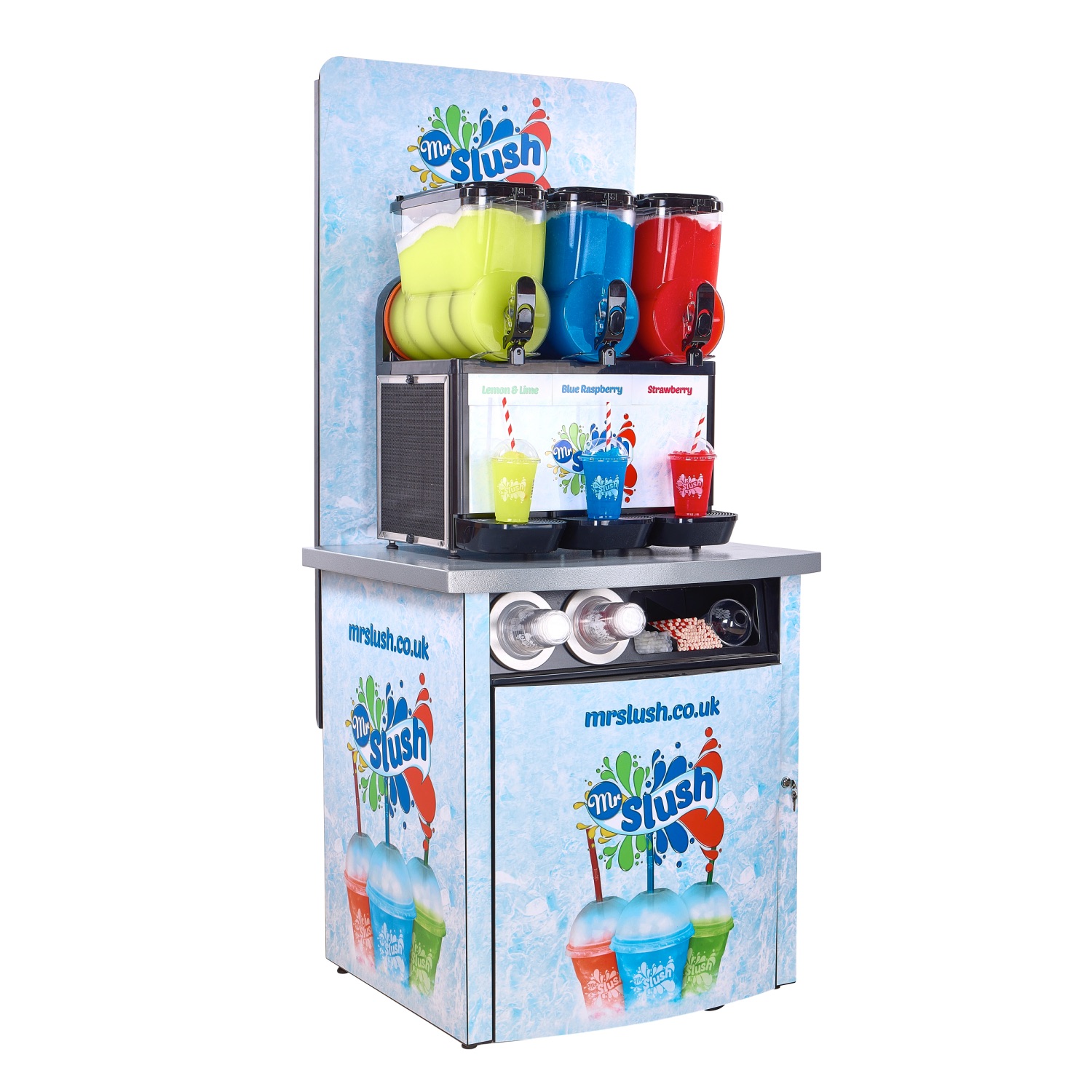
For a business where one flavour sells consistently well, the Freazy 1 may provide everything that's required. For many commercial venues, two flavours provide a great balance of choice and capacity, making the Freazy 2 particularly versatile. Where choice, volume and visual impact are important, the Freazy 3 offers three full-size tanks.
Freazy 1: a compact single-tank slush machine
The Freazy 1 features one 12-litre tank, making it the most compact machine in the range. It's particularly useful for businesses that want to introduce slush without dedicating a large amount of counter space to the category.
Typical venues could include:
- Smaller convenience stores
- Newsagents
- Independent cafés
- Takeaways
- Pubs offering one core frozen drink
- Seasonal businesses
- Event operators
A single-tank machine can also work well where there is one clear best-selling flavour. Rather than dividing sales across several bowls, the full 12-litre capacity is dedicated to one product. The Freazy 1 can hold up to approximately 60 x 200ml drinks or 31 x 385ml drinks, depending on serving size. It also benefits from the same 30–35 minute fast-freeze technology found across the Freazy range. For businesses wanting a straightforward introduction to commercial slush, the Freazy 1 offers a simple combination of capacity, compact size and commercial performance.
Freazy 2: two flavours with more capacity
The Freazy 2 is the twin-tank option in the range, featuring 2 x 12-litre tanks and 24 litres of total capacity. For many businesses, two flavours offer a particularly good balance. Customers have a choice, the machine creates a colourful visual display, and stock remains relatively straightforward to manage. Traditional combinations such as Blue Raspberry and Strawberry are instantly recognisable, although venues can naturally select flavours that better suit their own customers. A full Freazy 2 can hold approximately 80 x 300ml / 10oz drinks across its two tanks.
The twin-tank configuration can be particularly suitable for:
- Busy convenience stores
- Cafés
- Pubs and bars
- Restaurants and takeaways
- Bowling centres
- Soft-play venues
- Trampoline parks
- Cinemas
- Holiday parks
- Family entertainment venues
Each tank has its own settings, which provides useful flexibility when one flavour is selling faster than the other. With 24 litres of capacity and an approximate 30–35-minute freeze time, the Freazy 2 can provide a strong middle ground between a compact single machine and a larger triple-tank setup.
Freazy 3: three flavours for busier venues
For venues expecting higher demand or wanting a larger flavour range, the Freazy 3 provides 3 x 12-litre tanks, giving a total capacity of 36 litres. A full machine can hold approximately 120 x 300ml / 10oz drinks. Three tanks also create considerably more visual impact. Bright slush colours displayed side by side can make the machine a prominent part of the venue rather than simply another piece of equipment behind the counter.
The Freazy 3 can be particularly well suited to:
- Large leisure venues
- Busy convenience stores
- Cinemas
- Bowling and competitive-socialising venues
- Family entertainment centres
- Holiday parks
- Visitor attractions
- High-footfall hospitality venues
- Seasonal attractions
- Events
Having three independent tanks also allows different flavours to be managed individually. For venues where slush is expected to be an important part of the drinks offer, the additional capacity and flavour choice can make the Freazy 3 a strong option.
How much slush capacity does your venue need?
Tank size gives a useful indication of how much product can be available, but the way customers buy slush is just as important. Demand is rarely spread perfectly evenly throughout the day. A convenience store may experience its busiest period immediately after school. A leisure attraction could have a sudden rush when an activity finishes. A holiday park might be much busier during weekends and school holidays.
This is why peak demand can be more useful to think about than average daily sales.
If slush is expected to be an occasional additional drink, a single machine may provide plenty of capacity. Where there's likely to be regular daily demand, the twin Freazy 2 provides additional product and a second flavour. For businesses expecting particularly strong periods of trade, the 36-litre Freazy 3 provides additional capacity without sacrificing flavour choice.
How quickly do Freazy slush machines freeze?
Freeze time can make a big difference in commercial environments, particularly during busy trading periods. The Freazy range uses fast-freeze technology, with an approximate freeze time of 30–35 minutes under suitable operating conditions. This means correctly prepared slush mix can reach serving consistency relatively quickly. It can be particularly helpful when preparing the machine ahead of opening or recovering after a busy period where large amounts of product have been sold. Actual freezing performance will naturally vary depending on factors such as the product being used, ambient temperature and operating conditions, but fast freezing is one of the key benefits of the Freazy range.
Why does slush machine capacity matter?
Capacity and bowl count are related, but they aren't the same thing. Capacity tells you how much product the machine can hold. Bowl count tells you how many products or flavours can be offered at the same time. For example, a venue might have enough demand to justify a larger machine but still only want two core flavours. In that situation, the Freazy 2's two 12-litre bowls may make more sense than choosing three tanks simply for the additional flavour. Likewise, a venue where variety is central to the customer experience may benefit from having three flavours available even if all three don't sell at the same rate. Looking at both factors together usually gives a much clearer picture than comparing litre capacity alone.
How much space does a commercial slush machine need?
Counter space is another practical consideration. As the number of tanks increases, the overall footprint naturally becomes larger, so the best option often comes down to balancing available space with capacity. A single-tank Freazy 1 can be particularly useful where counter frontage is limited. The Freazy 2 offers significantly more total capacity while keeping the machine to two tanks. The Freazy 3 requires more space, but in larger venues that additional size can become part of the attraction by creating a highly visible frozen-drinks display. It can be helpful to have a rough idea of the available width, depth and height when discussing a machine with us. It doesn't need to be a detailed technical survey — a simple indication of the space available is often enough for us to point you towards the most suitable option.
Why are independent tank settings useful?
The tanks within the Freazy range can be controlled independently. On the twin and triple models, this offers useful flexibility throughout the trading day. Different flavours don't always sell at the same speed. Blue Raspberry may be disappearing quickly while another flavour still has plenty of product available. Independent controls mean each bowl can be managed separately rather than every tank having to operate identically. This also allows different slush products to be offered across the machine where suitable recipes and mixes are being used.
How does the Freazy range create a smooth slush texture?
The Freazy machines use Perfect Mix technology, with two areas of mixing designed to keep the product moving evenly around the freezing cylinder. That continual movement helps create the smooth consistency people expect from commercial slush. Adjustable settings also allow the finished product density to be controlled. The result is a machine designed not just to freeze a drink, but to maintain the texture required for quick, consistent serving throughout the day.
Are Freazy machines suitable for warm environments?
Commercial slush machines naturally tend to work hardest at the same time customers want slush the most — during warmer weather. Freazy machines use an air-cooled refrigeration system and are designed to operate in ambient temperatures of up to approximately 40°C. They also use refrigeration technology with a Global Warming Potential (GWP) rating of just 3, providing a significantly lower GWP than many traditional refrigerants. For businesses looking at the long-term environmental credentials of their equipment, this is another useful feature of the range.
Are Freazy slush machines easy to operate?
Slush is popular with commercial venues partly because service itself is so straightforward. Once the drink has reached the correct consistency, it can be dispensed directly from the machine using the push-and-pull serving taps. There's no blending or lengthy drink preparation at the point of sale. That makes slush particularly useful during busy periods when several customers need to be served quickly.
Other features across the Freazy range include:
- Illuminated tanks
- Night-time energy-saving settings
- Robust commercial components
- Independent tank controls
- Easy-access serving taps
- Straightforward cleaning and maintenance
These are relatively small details individually, but together they can make running a slush offer much easier during everyday service.
Is a commercial slush machine suitable for year-round use?
Slush is naturally associated with warmer weather, but many businesses now sell frozen drinks well beyond the traditional summer season. Indoor leisure venues, cinemas, bowling centres, entertainment businesses and holiday parks can experience demand throughout the year. Pubs and hospitality businesses may also use commercial frozen-drink machines for alternative products such as frozen cocktails where appropriate. This means the best machine isn't necessarily determined only by summer footfall. For many venues, the wider customer demographic, opening hours and type of experience being offered can be equally important.
What comes with a Mr Slush starter package?
A commercial slush setup involves more than the machine itself. Mr Slush also supplies the syrups and serving essentials used alongside the equipment.
Depending on the machine and package selected, starter bundles can include:
- Mr Slush syrups
- Slush cups
- Dome lids
- Slush straws
- Mixing containers
- Point-of-sale materials
- Machine branding
- Cleaning and maintenance equipment
Different starter-pack sizes are available across the Freazy range, making it possible to match the initial stock package with the size of the machine and expected level of trade. This can be particularly useful for businesses introducing slush for the first time, as the machine and much of the initial serving setup can be supplied together.
What support comes with a Freazy slush machine?
Commercial equipment is a long-term investment, so the support behind the machine matters too. The Freazy range includes a 12-month on-site parts and labour warranty, together with ongoing support from Mr Slush. The machines are built using robust commercial components and are designed for long-term operation in busy environments.
Mr Slush also supplies ongoing consumables, including:
- Slush syrup
- Cups
- Lids
- Straws
- Spare parts
- Cleaning and maintenance products
That means businesses can continue to source both equipment support and the products used with the machine from the same supplier.
Can a commercial slush machine be leased?
The Freazy range is available through several purchasing options, including:
- Outright purchase
- Lease rental
- Lease purchase
This gives businesses some flexibility in how they introduce commercial slush equipment. Some may prefer to purchase the machine outright as a long-term asset, while others may find that spreading the cost works better when launching a new drinks category.
Can commercial slush be profitable?
One of the reasons slush remains popular with retailers, hospitality businesses and leisure venues is the margin available on each drink. Depending on cup size, syrup costs and selling price, traditional slush can typically provide around 80–85% POR. The product is also extremely quick to serve once prepared, making it possible to handle multiple sales during busy periods without adding a complicated preparation process. Of course, the commercial opportunity will vary from venue to venue, but capacity is worth considering alongside potential sales. A larger machine is most valuable when there's enough demand to use that additional capacity.
Choosing a slush machine doesn't have to be complicated
The best commercial slush machine is ultimately the one that fits naturally into the way your business operates. For a smaller venue, that might mean keeping things simple with one 12-litre tank. For a busy shop, café or hospitality venue, two flavours and 24 litres of capacity may offer the ideal balance. For high-footfall leisure and entertainment businesses, three tanks can provide the capacity and variety needed for much busier periods. The Freazy 1, Freazy 2 and Freazy 3 make that choice straightforward, with the same core commercial technology available across single, twin and triple-tank configurations. If you're unsure which size would suit your venue, you don't need to arrive with all the answers. A little information about your business, available space and expected level of trade is usually enough for the Mr Slush team to recommend a suitable starting point.
Comments are closed