
Slush Syrup Stock Control: Forecast Flavours, Reorder Points and Waste
Good slush syrup stock control is not about holding the biggest possible supply. It is about knowing which flavours and serving items your venue uses, how quickly they move, when they expire and how long a replacement order takes to arrive. With a short weekly routine, cafés, shops, pubs, leisure venues and event businesses can keep popular slush drinks available without buying blind.
The most useful approach is flavour-led. Treat Blue Raspberry, Strawberry and every other syrup flavour as separate stock lines, rather than viewing all syrup as one total. Do the same for cup sizes, compatible lids and straws. A busy flavour cannot make up for an unavailable one, and a full box of cups is not helpful if the matching lids or straws have run out.
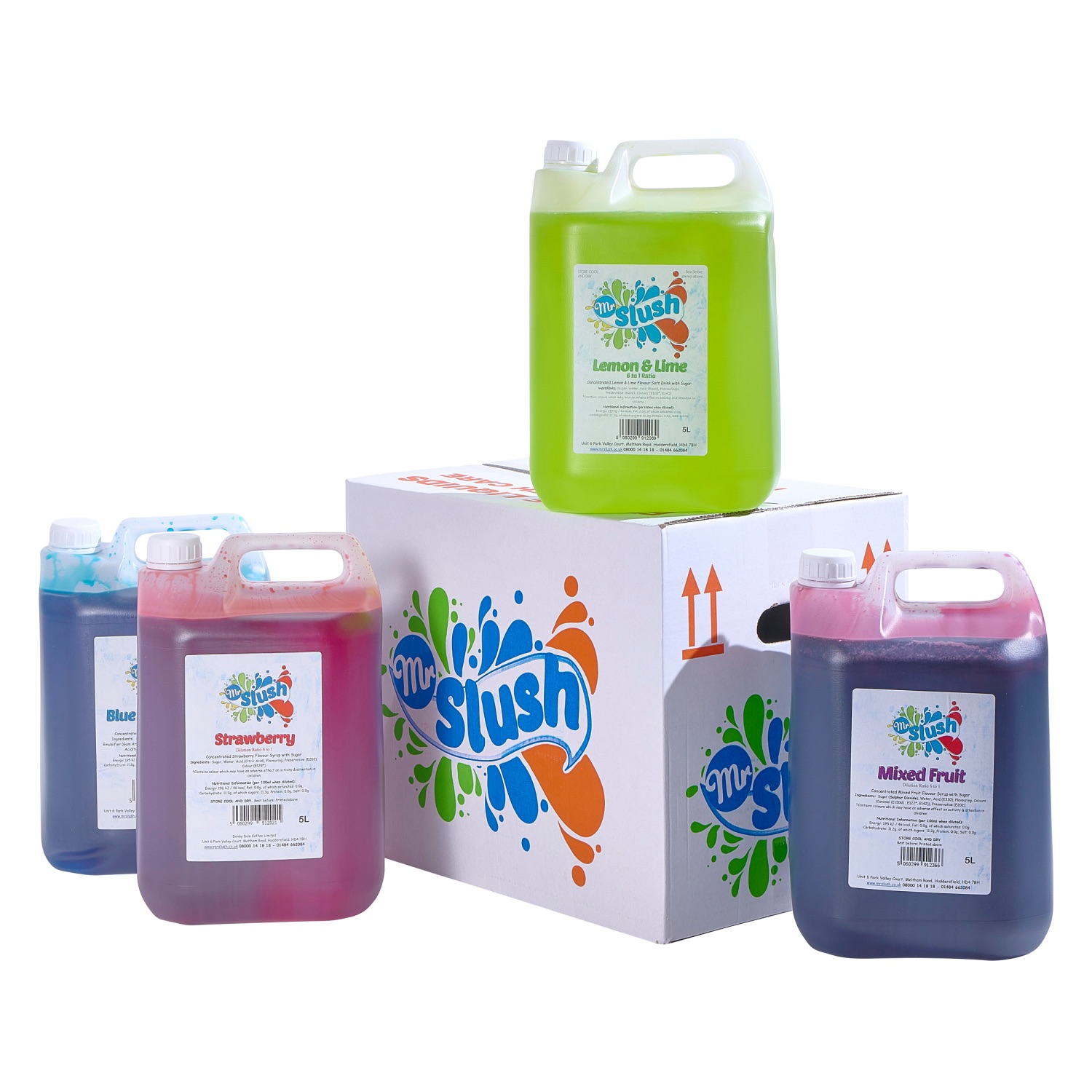
What should you count for slush stock control?
Start with a simple stock sheet that records the products needed to serve each drink. Keep it practical enough that a manager or trained team member can complete it consistently.
- Syrup by flavour and range: record unopened tubs or bottles separately from opened stock and product already prepared for service.
- Serving consumables: count cups by size, lids by the correct fit, and straws. Record them in the units in which you order them, such as sleeves or cases, but note the quantity within each pack.
- Best-before dates: record the earliest date for every syrup line, not merely the date on the newest delivery.
- Open or part-used product: make this visible. It should be used according to the product label and your food-safety procedures before opening another unit of the same flavour.
- Supplier lead time: write down the actual number of days between placing a typical order and having stock ready for use at your venue.
Mr Slush traditional glycerol-free syrup is supplied in 4 × 5-litre cases and uses a six-parts-water-to-one-part-syrup preparation ratio. The 99% Fruit range is a different product line: it is supplied in 2 × 5-litre cases and uses a five-parts-water-to-one-part-concentrate ratio. These differences matter when forecasting, so do not combine the two ranges in one usage calculation. Use the preparation ratio shown for the product you are ordering and serving.
How does a weekly count prevent gaps and over-ordering?
Choose one fixed time each week, ideally before placing your usual order. Count at the same point in the trading cycle where possible. For example, a leisure venue may find a Monday-morning count more comparable week to week than a Saturday-afternoon count during service.
For each line, record opening stock, deliveries received, closing stock and any product written off, returned or moved to another area. This gives you a reliable view of usage instead of relying on memory. If your till or POS system can report slush sales by flavour or button, compare it with the stock movement. Differences are useful prompts: a promotion, a large group booking, free samples, incorrect portions or unrecorded waste may explain them.
Keep a short note beside unusual weeks. Mark school holidays, bank-holiday weekends, warm weather, local events, private parties, machine downtime and changes to opening hours. Over time, those notes let you compare like with like instead of assuming every recent week represents normal demand.
A simple weekly stock sheet
- Week ending date
- Flavour or item name
- Unit counted: 5-litre tub, sleeve, case or individual item
- Opening quantity
- Quantity delivered
- Quantity remaining
- Quantity used or sold
- Earliest best-before date
- Reason for any waste or adjustment
- Next reorder decision and date placed
This record can be a spreadsheet, clipboard sheet or simple inventory app. Consistency matters more than complexity.
How should you forecast slush flavours?
Forecast at flavour level because customer preference is rarely evenly spread. Begin with the previous four comparable weeks of usage for each flavour. Add those four figures and divide by four to calculate an average weekly usage. If your trade is seasonal, compare the same period last year as well, where you have the data.
Then adjust only for a reason you can explain. If a school holiday begins next week, a holiday park reopens, a local festival is booked or a price promotion is planned, add a note and make a considered uplift from your own previous results. If the season is winding down, do not continue ordering from a peak-season forecast just because the machine remains on display.
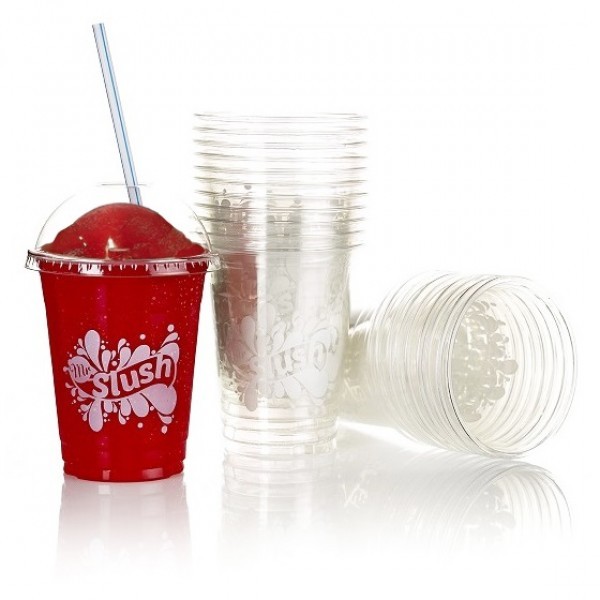
Use the same method for cups, lids and straws, but link these items to the cup size actually sold. For instance, a 12oz cup forecast should include the corresponding 12oz lid where that is part of your serve. Mr Slush lists different cup capacities and matching lid options, so check the item specification before treating lids as interchangeable.
What is a practical reorder-point formula?
A reorder point tells you when to place an order, not how much to purchase. Set one for each flavour and each consumable line using the unit that makes sense for that product.
Reorder point = average daily usage × supplier lead time in days + contingency stock
Your contingency stock is a small, deliberate reserve for normal uncertainty: a stronger-than-expected day, a delayed delivery or a counting discrepancy. It is not a universal number. Choose it from your own trading pattern, storage capacity, expiry dates and the order quantities available to you.
Illustrative worksheet: enter your own numbers
For one flavour, enter:
- Recent weekly usage: [week 1] + [week 2] + [week 3] + [week 4]
- Average weekly usage: total ÷ 4
- Average daily usage: average weekly usage ÷ 7
- Your supplier lead time: [number of days]
- Your contingency stock: [number of tubs, bottles, sleeves or cases]
- Your reorder point: average daily usage × lead time + contingency stock
When your available stock reaches that result, place the order. If product is bought only in cases, translate the result into your ordering unit before buying. Do not automatically round up to a large order if the next season is approaching or the item has a short remaining life.
Review the formula after several order cycles. A reorder point is working when it gives you time to replenish a fast-selling line without routinely leaving large quantities unused.
How can you rotate syrup to protect shelf life?
Use first-expiry-first-out rotation. Put stock with the earliest best-before date at the front or in the most accessible picking position, while newer deliveries go behind it. Check that the product and flavour labels remain visible. A date label on the shelf edge can make this much quicker during a weekly count.
For traditional Mr Slush syrup, the supplier states a shelf life of up to 16 months. The 99% Fruit range has a shorter fresh-product shelf life, described as averaging around three to four months and varying from one to five months. That makes date-led ordering especially important when you carry 99% Fruit flavours or are planning for a quieter period. Always use the best-before information on the product received as the stock-control reference, and follow the pack label and your own food-safety procedures for storage and handling.
Separate unopened stock from opened stock and from prepared mix. This makes it easier to see what needs attention first and avoids a new container being opened unnecessarily. It also gives managers a clearer audit trail if a flavour is repeatedly left part-used at the end of a shift.
What contingency stock should a small venue hold?
Contingency stock should protect availability without becoming hidden excess. Set it separately for each item. A core flavour that sells steadily may need a different reserve from a trial flavour. Likewise, straws may require a different buffer from 16oz cups if your venue mainly sells smaller drinks.
Use your own evidence to decide:
- How variable is daily demand?
- How often do deliveries arrive later than expected?
- Can you substitute another cup size or flavour without disrupting your menu?
- What is the earliest best-before date in stock?
- How much safe, organised storage space do you have?
- Are you approaching a quieter season, closure or change in trading hours?
Keep the reserve visible on the stock sheet. If staff repeatedly use it, that is a signal to revisit the forecast, lead time or reorder point rather than quietly increasing every order.
How do you manage stock for events and seasonal peaks?
Event businesses and leisure sites should create a separate event forecast rather than letting a one-off peak distort the normal weekly average. Estimate sales using attendance or booking information you hold, then identify the flavours and cup sizes likely to be offered. Order only after checking the dates on stock already held and the time left after the event to sell any remaining product.
Mixed flavour cases can be useful where demand is split across several flavours, because they allow the order to reflect the forecast rather than forcing equal quantities of every line. Mr Slush offers mixed cases of four 5-litre flavours, enabling venues to choose the blend they need.
For a major weekend, set a clear service plan: where reserve cups and straws are stored, who can authorise opening contingency stock, and when the team will check levels. A mid-event count is often more useful than waiting until the next weekly review.
What should you review after the season?
At the end of a busy period, review flavour sales, consumable usage, stockouts, best-before dates and recorded waste. Ask which flavours earned repeat orders, which were only popular during a promotion, and which stock lines were consistently carried over.
Use those answers to reduce next year’s opening order to a purposeful range. Retain enough stock to serve expected trade, but avoid treating last year’s peak purchase as a default. Your best stock-control system will become more accurate as it is built from your venue’s actual sales, lead times and seasonality.
When you are ready to replenish, order syrup and the compatible cups, lids and straws together where appropriate. A planned repeat order supports reliable service while keeping your stockroom focused on the flavours and consumables your customers actually choose.

Comments are closed